“All you do is sift the flour and baking powder into a roomy mixing bowl, lifting the sieve quite high to give the flour a good airing as it goes down, then simply add all the other ingredients.” My mum, following Delia Smith’s instructions for a classic sponge cake, began what would become the staple of every birthday for both my younger brother and me. My first memory of joining her was when I was around 5; before she could add the wet ingredients to the dry, I would stop her. It was imperative that she cut the flour, as this was what distinguished a good cake from a bad one. I proudly contributed, lifting the scissors to carefully and evenly cut all of the sifted flour. Only then could she continue with the recipe.
“Now, using an electric hand whisk, combine them for about 1 minute until you have a smooth creamy consistency.” Our kitchen is now very well-stocked, especially with baking supplies, as I have become the family baker and pushed for these upgrades. But in my childhood, we only had a wooden spoon with which to mix the ingredients. My mum usually started mixing, the spoon beating the mixture hard, a repeated slapping sound as it spun the batter around the bowl. Once it was reasonably well-mixed, I would finish it off. It was terribly hard work, much harder than she had made it look, and I was slow. She held the bowl for me so that I could wrap both of my hands around the wooden spoon, trying to push the batter with as much force as she had. Without her support of the bowl, it would fly to the edge of the counter and risk shattering. There would be no licking the bowl if that happened, so I always made sure that we completed this step together before transferring the batter to the tin.
“Next divide the mixture between the two prepared tins, level off using the back of a tablespoon, and bake near the centre of the oven for about 25 minutes.” We only had one tin, which went in for about 35 minutes. To this day, my mum doesn’t understand how the recipe could possibly yield two cakes, as the one we made was quite thin. Nonetheless, the smell would drift throughout the house, warming the air with its scent of comfort. It felt like hours to my young self. To tide me over until it was finished, my brother and I were allowed to “lick the bowl,” and we took this job seriously.
We would first go in with spoons – I paid close attention to ensure that the leftover batter was evenly split between the two of us – and then with our fingers to finish it off. Now, the scents of my baking are a message, calling my family to my kitchen, knowing this to be the signal that it has been reopened to them. My brother licks the bowl himself – although far less frequently, as many of my recipes involve so many steps that whatever comes out of the oven is unrecognizable as the dough that had once fermented and proofed in the bowl, a long leap from the one-bowl sponge cake that was equally delicious before and after baking.
“The cakes are cooked when you press lightly with your little finger and the centre springs back. Remove them from the oven and after about 30 seconds loosen the edges by sliding a palette knife all round them out onto a wire cooling tray.” Our preferred method of testing the cake was to stick a knife inside – if it came out clean, the cakes were finished, if not, they needed a bit more time. The 35 minutes was perfect, the top a rich golden-brown, but we had a habit of not quite greasing the tins well enough. Sliding the knife around the edges took a bit of work and precision, but I was allowed to help as my mum guided it around the curve of the cake.
“Now carefully peel back the lining by gently pulling it back. Lightly place the other cooling tray on top and just flip them both over so that the tops are facing upwards (this is to prevent them sticking to the tray).” We chose not to line it with parchment paper, which often left us banging an upside-down, under-greased tin onto a cutting board – cooling racks also took a few years to enter our kitchen – but most of the time there wasn’t too much cake stuck to the bottom. Whenever there was, my mum was disappointed, but my brother and I eagerly
attacked this early sample of the baked cake. Our next task was to cut the cake in two, a step with which I could not help. I observed as my mum took a serrated bread knife and carefully cut through the middle. It always seemed to take a painfully long time, as she had to move slowly to ensure that both halves were even and that the bottom ended up on the plate where we would begin to decorate.
We would always decorate cakes on the plate upon which they were to be served. But this year I received my first cake platters – one for decoration, one for presentation – and, with a diverse array of piping tips, I have been working on my decorating and plating skills, which have evolved from spreading jam and cream onto a sponge to elaborately piped cupcakes, multi-layered babka, and macarons and choux à la crème displayed neatly on a table arranged for food photography.
“When cooled, sandwich them together with any sort of preserve or lemon curd, with or without fresh whipped cream (in the summer, fresh berries and cream make a superb filling).” Freshly whipped cream, strawberry jam, and fresh strawberries filled our sponge cakes. We would first spread a thin layer of jam, then add the cream, and finally the strawberries. Placing the second half on top was tricky given how thin and breakable it was, so my mum maneuvered this herself. The top of the cake received another layer of jam, but cream was spread across both the top and sides of the cake. As the final step, we topped it with more strawberries, and it was ready for each birthday as far back as I can remember.
In the years since, with refined technique and upgraded equipment, I have started new baking traditions that go far beyond putting together that classic sponge cake so many years ago. From a simple birthday tradition, I discovered a love for baking that brought a family friend to tears upon tasting my cinnamon babka, a close reminder of her own childhood with her grandmother in her home country, Belarus, that she last tasted more than 20 years ago.
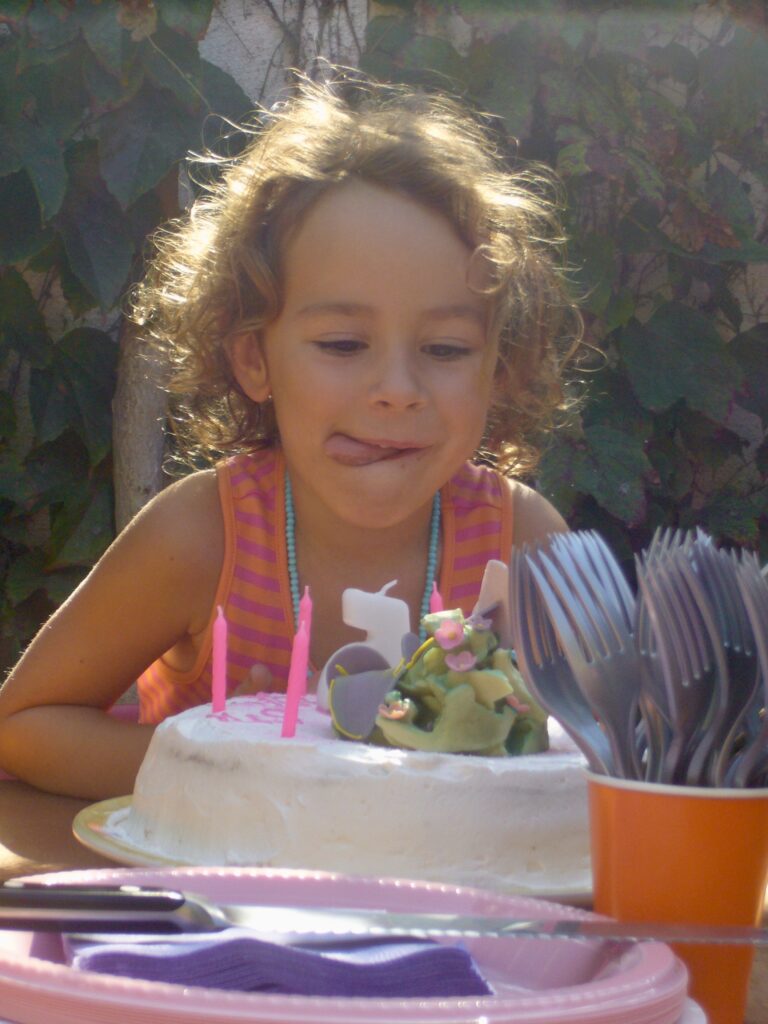
Classic sponge cake (decorated differently to recipe)
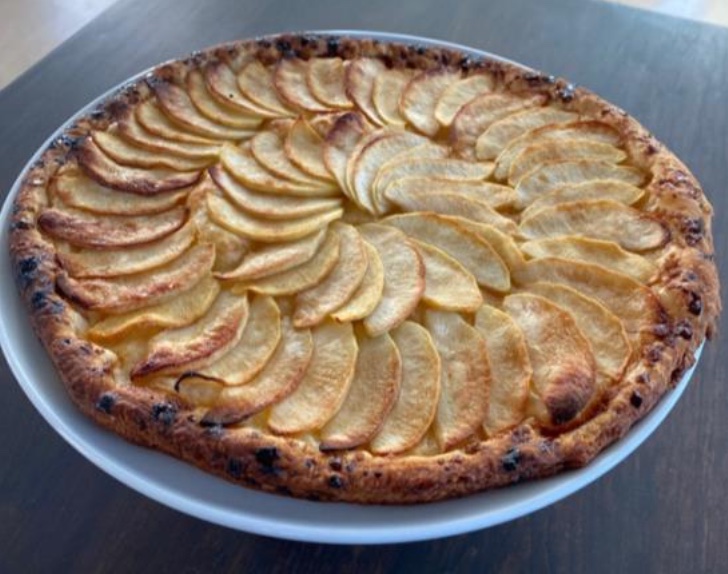
Tarte fine aux pommes
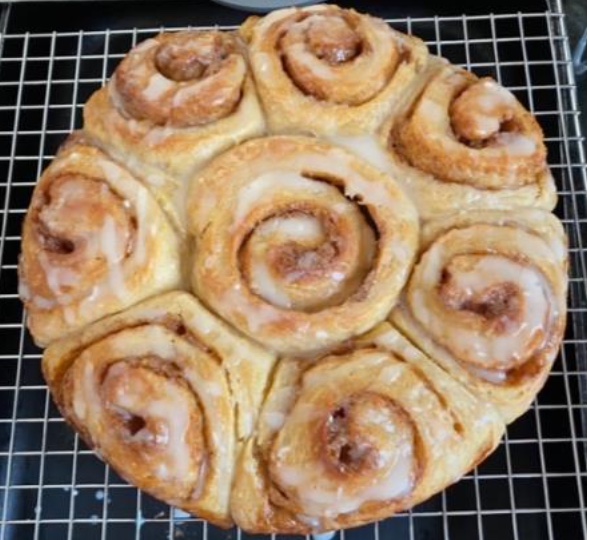
Cinnamon rolls
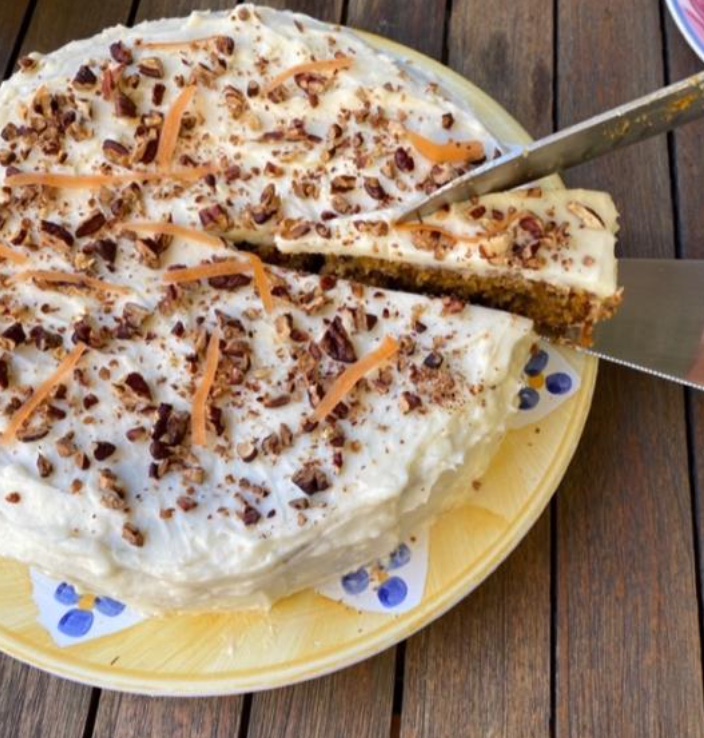
My dad’s favorite carrot cake
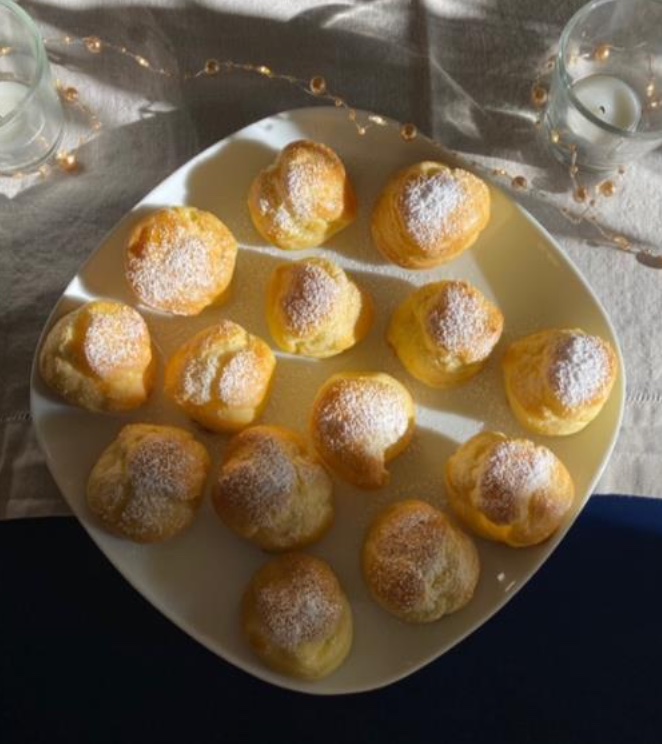
Vanilla choux à la crème
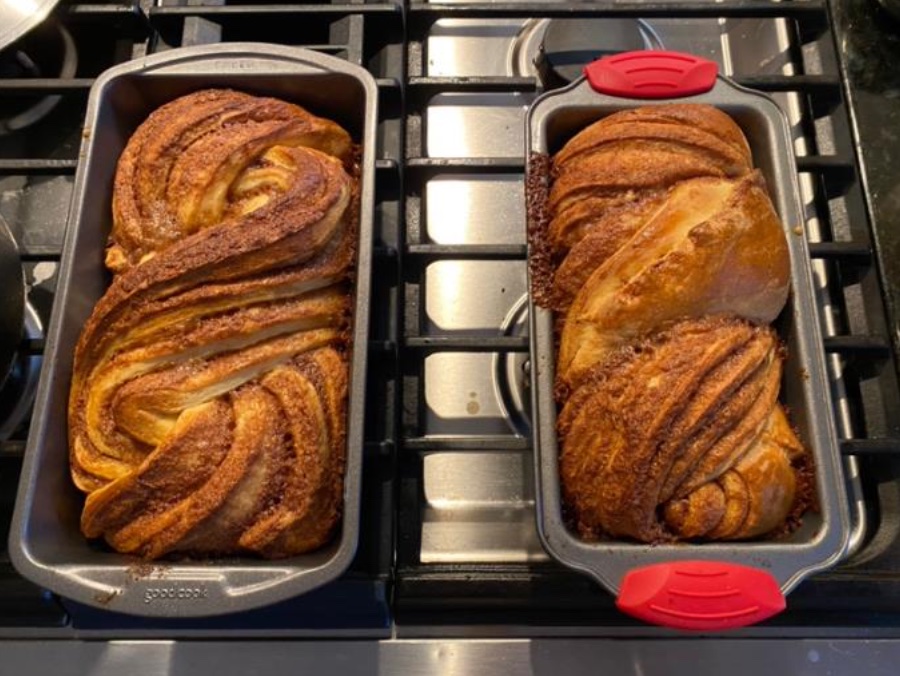
Cinnamon babka
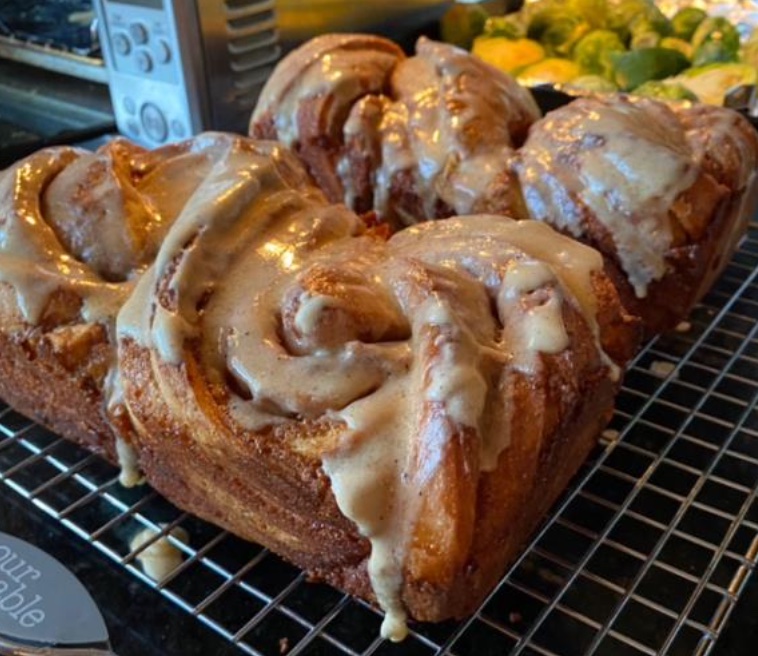
Cinnamon babka with brown butter glaze
About the author:
Lila Victor is a graduating 3rd year majoring in French and minoring in Creative Writing. She is from LA, a pianist, and enjoys trying new recipes, perfecting old ones (for both baking and cooking), and working on her latté art.
