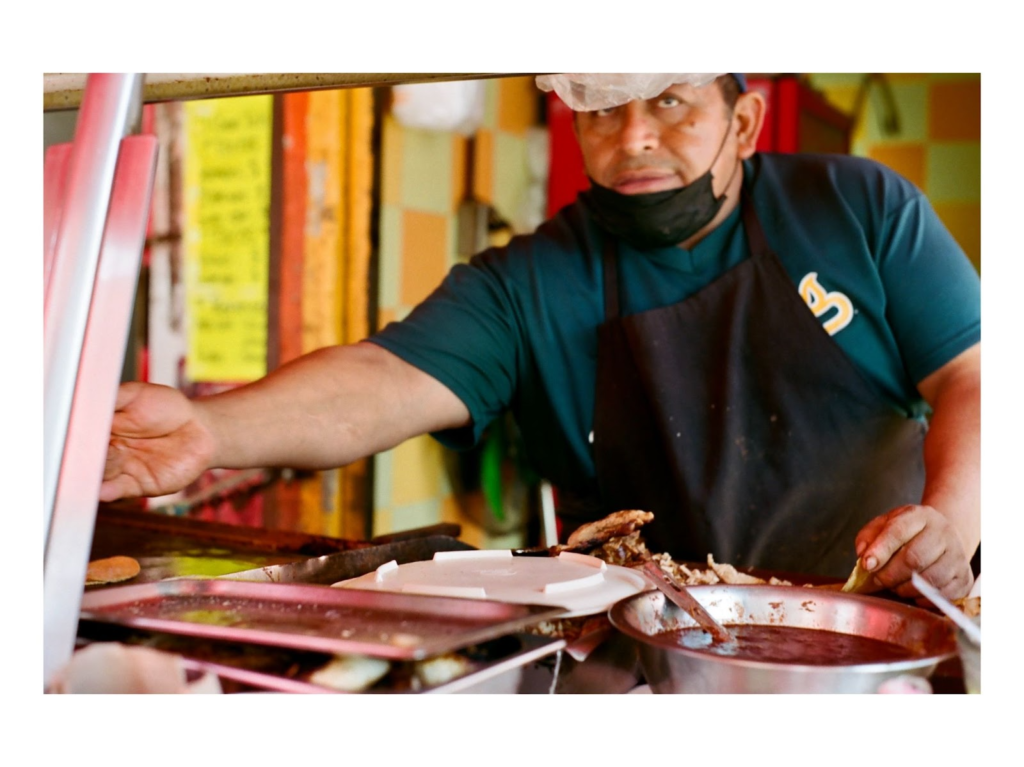
Mercado San Benito, Mérida, Yucatán (Minolta X-370, Film, Portra 400).
I took this photo on the outskirts of Mercado San Benito, a sprawling indoor/outdoor street food market located in Mérida’s Centro neighborhood. Mercado San Benito spans six city blocks, and the lively bazaar distinctly counterpoises the polished Spanish cathedrals that sit just a few steps away. Walking from the cathedrals that are surrounded by high-end Spanish and Yucatecan restaurants to the Mercado feels like entering a brand new city. The dividing line between the two spaces is visibly denoted by the food vendors that operate on the border of the Mercado. That being said, there is no need to keep your eyes peeled for the entrance to the Mercado, as you will smell the captivating aromas of the dividing line far before you see it.
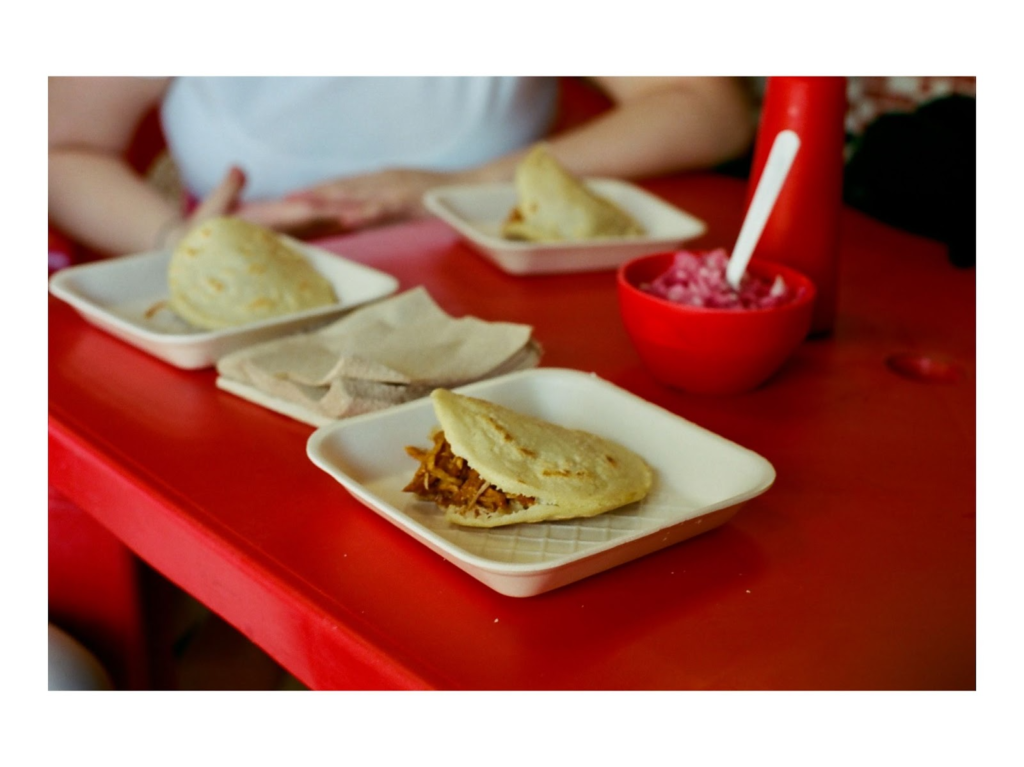
Gorditas Doña Gorda, Mérida, Yucatán (Minolta X-370, Film, Portra 400).
When used colloquially, “Gordita” loosely translates to “fat and cute.” I took this photo at Gorditas Doña Gorda, a small gordita shop near Mérida’s central square. The image depicts an order of a Cochinita Pibil Gordita. While gorditas share similar core ingredients with a taco, a gordita is made with a thick corn tortilla that usually has a pocket of filling in the middle. Cochinita Pibil is a Mayan pork dish made by slow-roasting pork shoulder in a pib – an earth oven. Before being cooked, the pork gets marinated in a blend of ground annatto seeds, Seville oranges, cumin, and pepper. Seville oranges, not to be confused with navel oranges, are intensely sour and unique to the Yucatán and to Mayan culinary traditions. As one guide said, “The rest of Mexico uses limes. Here in the Yucatán, we use sour oranges – that is why our food is the best.”
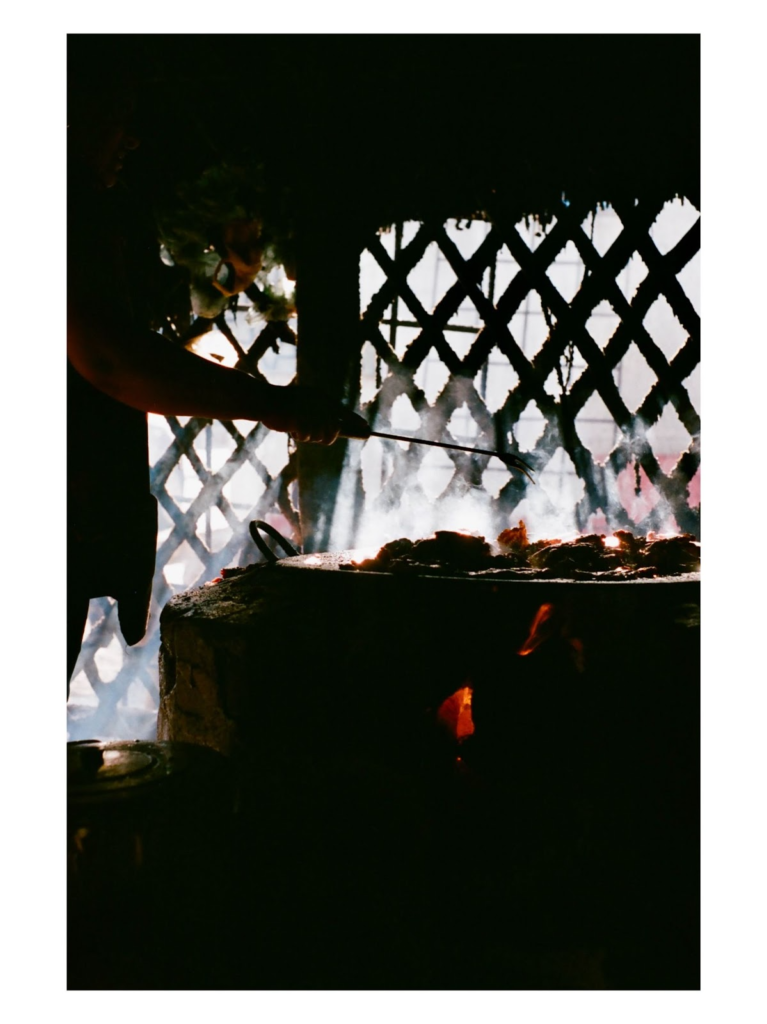
La Tía De Kaua, Kaua, Yucatán (Minolta X-370, Film, Portra 400).
Located just 18 km from the famed new-wonder-of-the-world, Chichén Itzá, La Tía De Kaua is a family-run restaurant that serves just five things, Poc Chuc, Longaniza, Huevos Encamisados, hand-pressed tortillas, Sopa de Frijol, and made-to-order salsa. La Tía De Kaua does not use menus, but ordering was as straightforward as could be. The constant stream of locals and tourists alike allowed me to point to the next table over and order with eyes that were bigger than my stomach. This photo depicts one of the chefs – La Tía – searing strips of marinated Poc Chuc over a flat-top charcoal grill. Similar to Cochinita Pibil, Poc Chuc is a traditional Mayan dish that uses Seville oranges instead of limes to cut through the fattiness of the pork.
Leo Hidy is an Oberlin College fourth-year majoring in American Studies, Economics, and Business. Raised in San Francisco, California, Leo loves west-coast style Asian cuisine. Leo will spend the next two years teaching in Machida, Japan, and hopes to expand his cooking repertoire while abroad.
